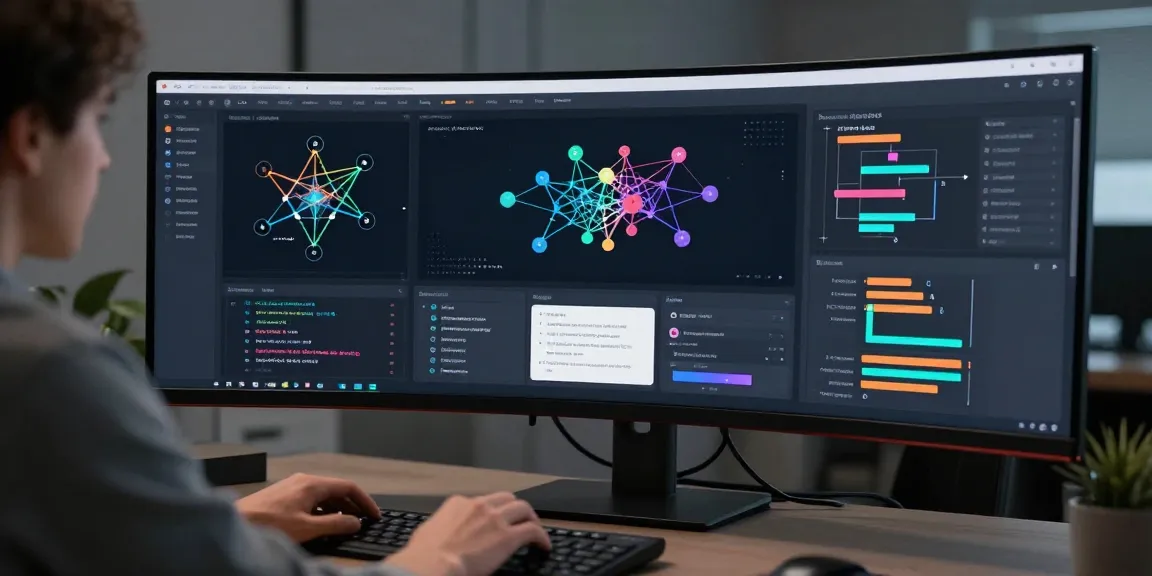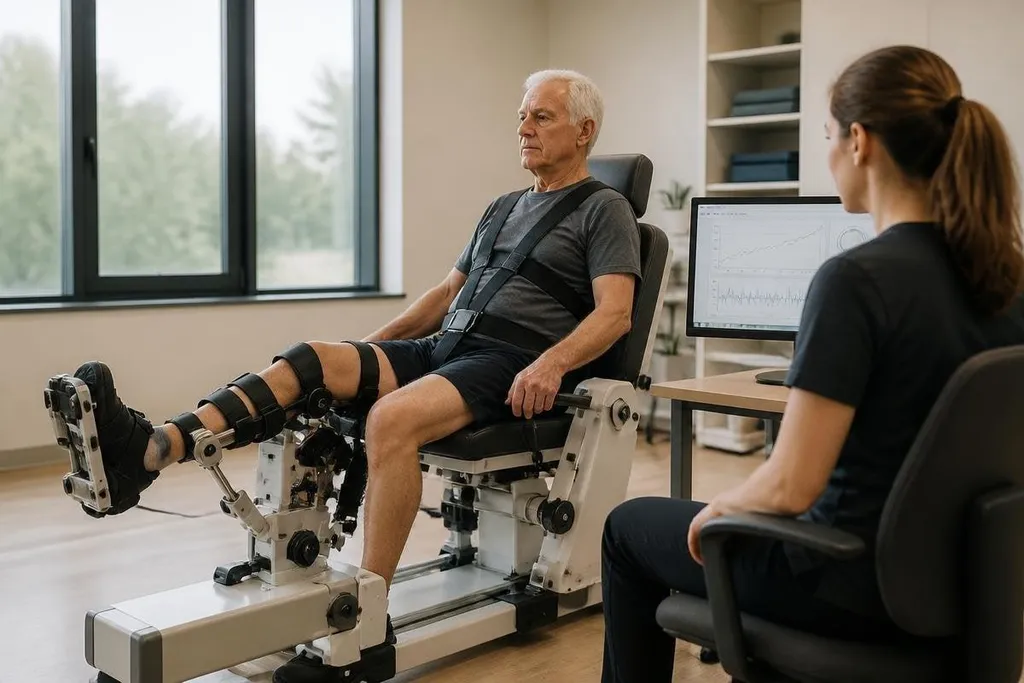
A rehabilitation robot can guide a leg through the same motion many times, then record how the patient responds.
Future systems will need to turn that movement data into useful treatment decisions for a clinician.
The machine matters. The evidence matters more.
Quick read
- Robots can guide repeated arm, leg, or walking exercises while sensors record movement.
- Good systems adjust support as a patient gains strength or control.
- Clinics still need clear proof that a robot improves recovery, access, or staff time.
What these robots do
Rehabilitation robots fall into a few working groups. An exoskeleton fits around the patient’s body and supports a joint or limb. An end-effector system guides the hand or foot from a handle or platform. A robotic treadmill can support part of a person’s weight while the legs practice walking.
Each design changes the task in a different way. An exoskeleton can help a patient stand and step with less load on weak muscles. An arm system can guide a reaching task while measuring the path, speed, and force. The useful question is always the same: what movement does the patient need to practice?
Sensors give the robot a closer view of that movement. Force sensors can show how much help the patient receives. Position sensors can record joint angle and speed. A camera or pressure plate can add information about balance and foot placement.
That record gives the clinician more than a note that says an exercise was completed. It can show where the patient lost control, how much support changed, and which task caused trouble.
Support should change during treatment
A patient may need strong guidance during an early session and less help later. A fixed level of support can make the exercise too hard for one person and too easy for another. Future systems will need controls that respond to the patient’s actual effort during each task.
That does not mean the robot should make every decision alone. A clinician still sets the task, checks the patient, and decides when a change makes sense. The robot’s job is to apply the chosen support in a repeatable way and show what happened.
This is where software becomes part of the treatment tool. The system may adjust speed, resistance, or weight support after each attempt. Those changes need clear rules, visible settings, and a record that a clinician can review later.
A smoother assisted step does not show whether the patient improved after the session. Robot 24 reporting can place the robot model, trial setting, date, and measured result beside the claim, so you can judge the treatment before looking at limits beyond the motor.
The hard limits are outside the motor
A robot can guide a motion with care and still fail to fit a clinic. Staff need time to position the patient, check straps, clean contact surfaces, and move the system between sessions. A large machine may work well in a rehabilitation center but fit poorly in a small treatment room.
Cost also shapes access. A clinic must account for the robot, service, training, software, and the time needed for each session. A system that needs one staff member to manage every movement may add little capacity, even if the hardware works as designed.
Patient comfort is another test. Pressure from a brace, noise from motors, or a poor fit can shorten a session. A robot that records perfect motion for ten minutes may be less useful than a simpler device a patient can use for longer.
The clinical proof remains the open question. A smoother path or a larger number of repetitions does not by itself show better recovery. Trials need to compare patient results, session time, safety, and staff workload. I’d treat any claim beyond those measures with care.
A buying checklist for clinics
Before a clinic considers a rehabilitation robot, check these points:
- Define the task: Name the movement, patient group, and treatment goal.
- Check the fit: Measure the room, doorways, patient supports, and cleaning needs.
- Review the controls: Ask who sets force, speed, range, and stop limits.
- Read the data plan: Confirm what gets recorded, where it is stored, and who can view it.
- Count staff time: Include setup, transfers, training, service, and shutdown.
- Ask for proof: Request clinical results that match the task your clinic plans to run.
The next useful step for rehabilitation robots is a clear link between guided movement and patient progress. Until that link is shown in clinical results, the best system is the one that gives therapists safe control, useful measurements, and enough time with each patient.