Introduction to the Everest Base Camp Heli Trek
The Everest Base Camp Heli Trek is an exhilarating adventure that combines the thrill of trekking through the majestic Himalayas with the convenience of a helicopter return. This unique trekking experience is perfect for those who wish to explore the breathtaking landscapes, rich culture, and stunning vistas of the Everest region without enduring a long and strenuous descent. By opting for a helicopter ride back, trekkers can enjoy the beauty of the mountains from above, making it an unforgettable journey. Whether you are a seasoned trekker or a novice adventurer, the Everest Base Camp Heli Trek offers something for everyone.
What is the Everest Base Camp Heli Trek?
The Everest Base Camp Heli Trek is a specially designed trek that allows adventurers to hike to the iconic Everest Base Camp (EBC) and then return to Kathmandu by helicopter. This trek typically follows a route through the picturesque Khumbu region, passing through charming Sherpa villages, ancient monasteries, and stunning mountain scenery. The journey to EBC usually takes about 8 to 10 days, with plenty of opportunities for acclimatization and exploration along the way. The helicopter return provides a quick and scenic exit, offering breathtaking aerial views of the Himalayas.
Benefits of Taking the Heli Trek
Choosing the Everest Base Camp Heli Trek offers numerous advantages. Some of the key benefits include:
- Time Efficiency: The helicopter return significantly reduces travel time, allowing trekkers to enjoy more time at base camp and less time descending.
- Scenic Views: Flying back provides a unique vantage point of the majestic peaks and valleys of the Khumbu region, making for incredible photo opportunities.
- Less Physical Strain: For those who may struggle with long descents, the helicopter option alleviates the physical demands of a multi-day trek back to Lukla.
- Convenience: It allows trekkers to complete the trek in a shorter timeframe, making it ideal for those with limited vacation days.
Preparing for Your Adventure
Preparation is key to a successful trek. Consider your physical fitness, gear, and necessary documents before embarking on this incredible journey. When exploring options, Everest Base Camp Heli Trek provides comprehensive insights on preparation and planning. Ensuring you have the right equipment and a good understanding of altitude acclimatization can make all the difference in your trekking experience.
Planning Your Everest Base Camp Heli Trek
Choosing the Right Tour Operator
Selecting an experienced and reputable tour operator is crucial for a successful Everest Base Camp Heli Trek. Look for operators with positive reviews, knowledgeable guides, and comprehensive packages. They should offer clear itineraries, acclimatization strategies, and emergency plans. A good operator will also ensure your safety and comfort throughout the journey.
Itineraries and Trip Duration
Typical itineraries for the Everest Base Camp Heli Trek range from 8 to 12 days, depending on the pace of the group and the inclusion of acclimatization days. Most itineraries include:
- Flight from Kathmandu to Lukla
- Trekking to Namche Bazaar for acclimatization
- Continued ascent to Tengboche and Dingboche
- Final trek to Everest Base Camp and Kala Patthar for sunrise views
- Helicopter return to Kathmandu
Cost Breakdown and Budgeting
The cost of the Everest Base Camp Heli Trek varies widely based on the tour operator, the season, and the inclusions in the package. On average, expect to pay between $2,000 and $5,000 per person for a complete package. Factors influencing the cost include:
- Duration of the trek
- Level of accommodation (teahouse vs. luxury lodges)
- Inclusions such as meals, guide services, and permits
- Altitude insurance and helicopter return costs
Always clarify what is included in the price to avoid additional expenses during your trek.
Essential Gear for the Trek
Clothing and Layering for High Altitude
The right clothing is vital for comfort and safety during your trek. Layering is the best strategy for handling changing weather conditions. Essential clothing items include:
- Base layers (thermal tops and bottoms)
- Insulating layers (fleece or down jackets)
- Waterproof and windproof outer layers (jackets and pants)
- Durable trekking boots with good ankle support
- Warm hat, gloves, and neck gaiters
Recommended Equipment and Supplies
In addition to clothing, you'll need specific gear for a successful trek. Don't forget to pack:
- Backpack (40-60L capacity)
- Water purification system (tablets or filters)
- First aid kit and personal medications
- Headlamp with spare batteries
- Camera or smartphone for capturing memories
Safety Gear and Emergency Preparations
Safety should always be a priority on any trekking journey. Essential safety gear includes:
- Emergency whistle
- Altitude sickness medication (like Diamox)
- Oxygen canister (if necessary, consult your guide)
- Portable power bank for charging devices
It's also wise to have a reliable communication method in case of emergencies, such as a satellite phone or a personal locator beacon.
Health and Acclimatization Tips
Understanding Altitude Sickness
Altitude sickness is a serious concern when trekking to Everest Base Camp. Symptoms can include headaches, nausea, fatigue, and dizziness, primarily due to reduced oxygen levels at higher elevations. It’s crucial to recognize these symptoms early and act accordingly, either by descending to a lower altitude or seeking medical assistance.
Hydration and Nutrition on the Trek
Staying hydrated and well-nourished is essential during your trek. Drink plenty of water and eat high-energy foods to fuel your body. Recommended snacks include:
- Nuts and dried fruits
- Energy bars
- Chocolate for quick energy boosts
Plan for three hearty meals each day and acclimatize properly to minimize the risk of altitude sickness.
Best Practices for Acclimatization
To acclimatize effectively, consider these best practices:
- Ascend slowly and allow your body to adjust.
- Incorporate rest days in your itinerary.
- Stay hydrated and maintain a balanced diet.
Listening to your body is vital; if you feel unwell, inform your guide immediately.
Experiencing the Journey: Highlights and Expectations
Scenic Highlights Along the Trek
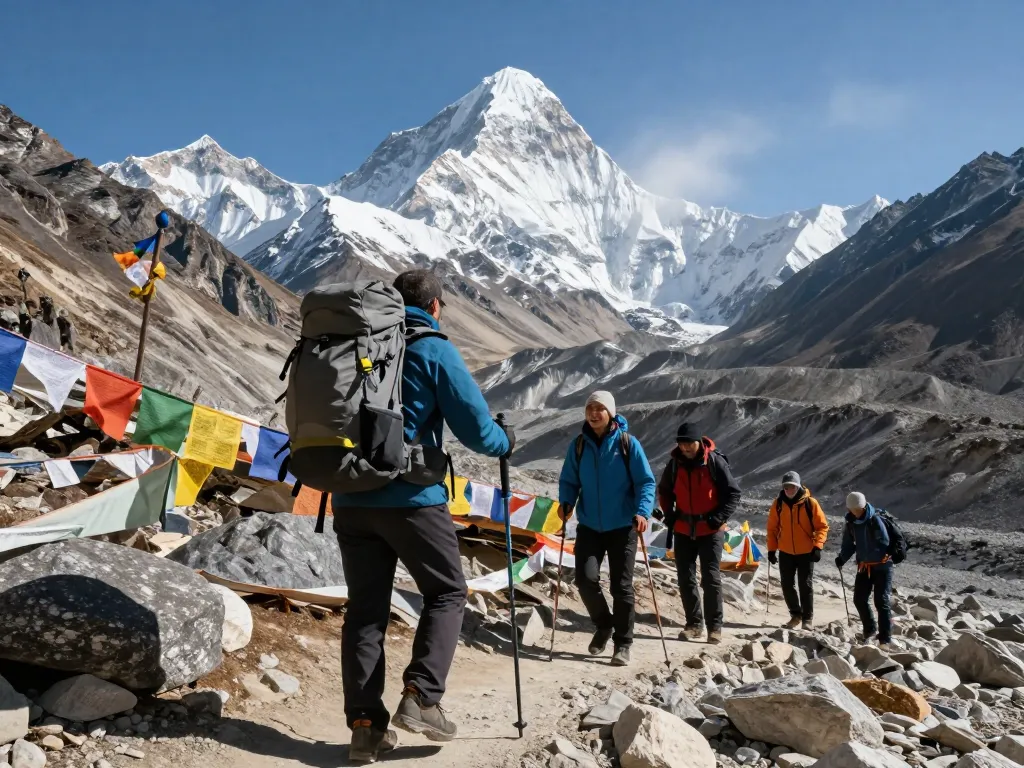
The Everest Base Camp Heli Trek is filled with stunning sights, from the lush valleys dotted with colorful prayer flags to the towering peaks of the Himalayas. Key highlights include:
- The vibrant market town of Namche Bazaar
- The historic Tengboche Monastery
- Panoramic views from Kala Patthar, particularly at sunrise
Local Culture and Interaction
Interaction with the local Sherpa culture can enhance your trekking experience. Be respectful and engaged; learn a few local phrases, share stories, and savor traditional Sherpa dishes like Dal Bhat and Momos. Each interaction adds depth to your adventure and a better understanding of this rich culture.
What to Expect During the Helicopter Return
The helicopter ride back to Kathmandu is often a highlight of the trek. Expect stunning aerial views of the Himalayas, including Mount Everest, Lhotse, and Ama Dablam. The journey typically takes about 30-40 minutes, providing a unique perspective on the majestic landscapes you hiked through. Keep your camera ready, as the helicopter offers a vantage point that’s difficult to replicate.